Stokmarknes weather camera (Yr)
Stokmarknes, Vesterålen, Norway
Air-ambulance weather camera at Stokmarknes, between Lofoten and Vesterålen.
Live hourly aurora score for Sortland, Norway: NOAA activity, cloud cover, darkness and the moon, with the nearest webcams.
Stokmarknes, Vesterålen, Norway
Air-ambulance weather camera at Stokmarknes, between Lofoten and Vesterålen.
Myre, Vesterålen, Norway
Air-ambulance weather cameras at Myre in Øksnes, Vesterålen.
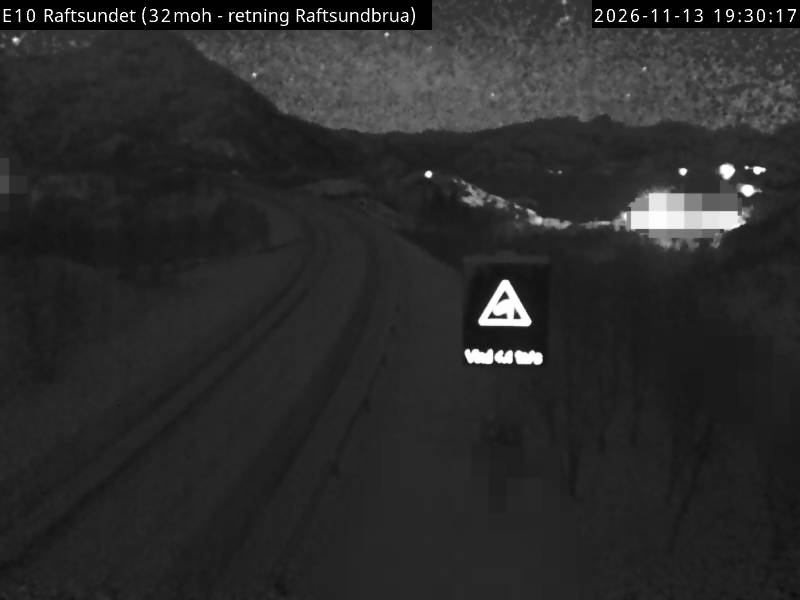
Raftsundet, Lofoten–Vesterålen
Mountains along Raftsundet with sky above the ridge line; infrared B/W at night.
Risøyhamn, Andøya, Norway
Air-ambulance weather cameras at Risøyhamn on Andøya, Vesterålen.
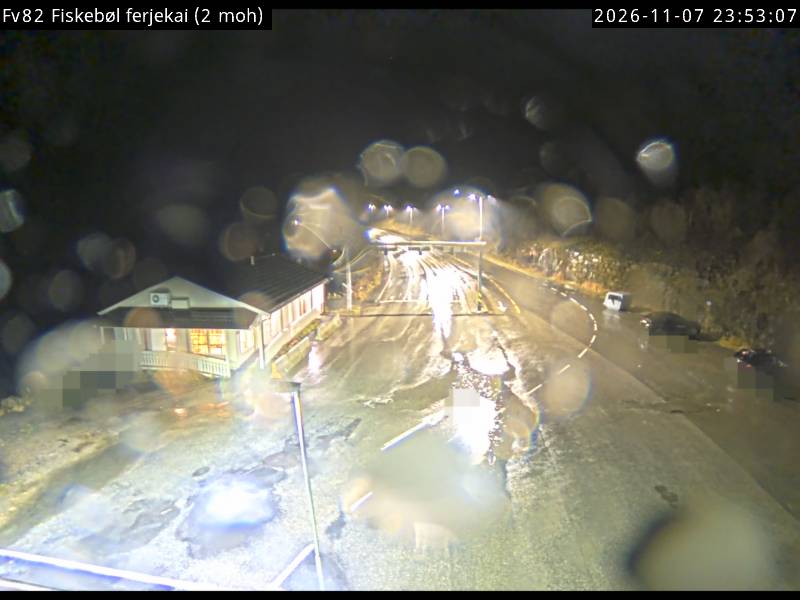
Fiskebøl ferry quay, Lofoten, Norway
Colour quay camera with a wide sky above the mountains; stars show on clear nights.
Stornes, Harstad, Norway
View from north of Harstad towards Grytøya island, between Lofoten and Tromsø.
Svolvær, Lofoten, Norway
Two live cameras at the Svinøya fishermen's cabins in Svolvær, Lofoten.
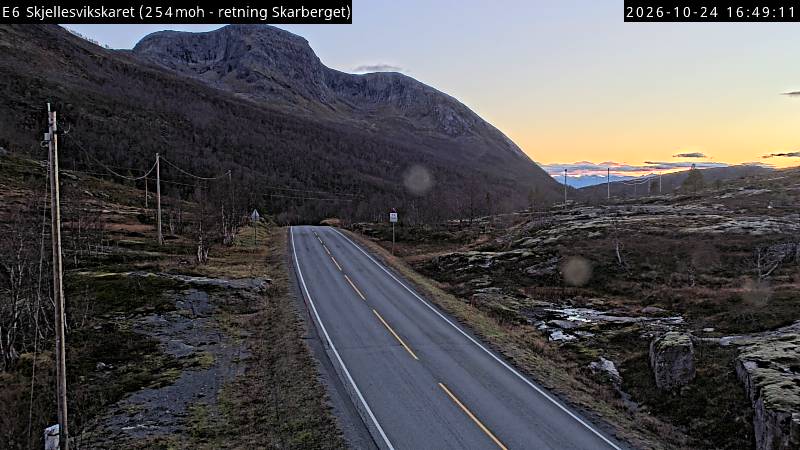
Skjellesvikskaret, Nordland, Norway
Mountain pass between steep slopes with a good patch of sky; infrared B/W at night.
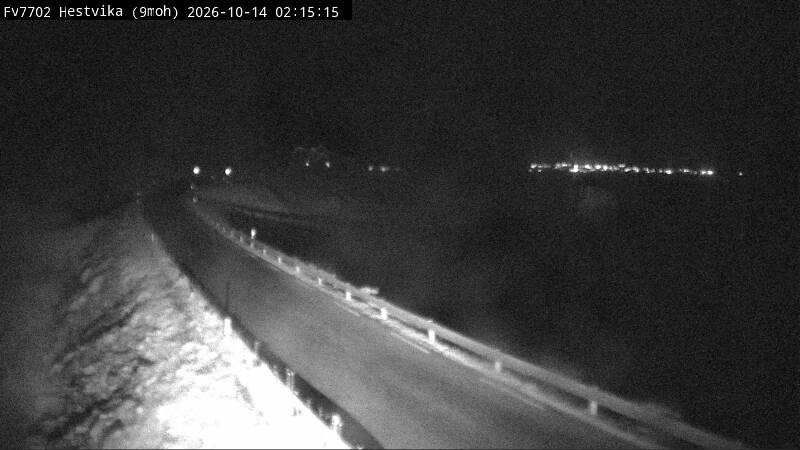
Hestvika, Andøya, Vesterålen
Coastal road on Andøya with the sea and Bleik's lights under a wide sky; infrared B/W at night.
Sortland lies at 68.70° N in Nordland, Norway, about 238 km north of the Arctic Circle. With a geomagnetic latitude of about 67.0°, it sits under the auroral oval: even quiet nights (Kp 1–2) can bring aurora overhead. Over the long term, a dark, clear night here has roughly a 75% chance of some visible aurora.
Darkness is never the problem in winter: the sun stays below the horizon from early December to early January, and nights with at least two hours of real darkness run from late August to mid-April. Between late May and late July the midnight sun makes aurora impossible to see. Around the winter solstice the sun is more than 12° below the horizon for about 16 hours a day.
Clouds decide most nights. Long-term records for Lofoten Islands, 62 km away, show night-time cloud cover averaging 72% in September, the clearest month of the season, so roughly 28% of nights are clear then. Check the cloud layers in the hourly forecast above: a short drive can make the difference when cloud is patchy.
Coordinates: Wikipedia. Magnetic latitude, Kp and darkness are calculated from them; the clear-night chance is a long-term average, not a forecast.
