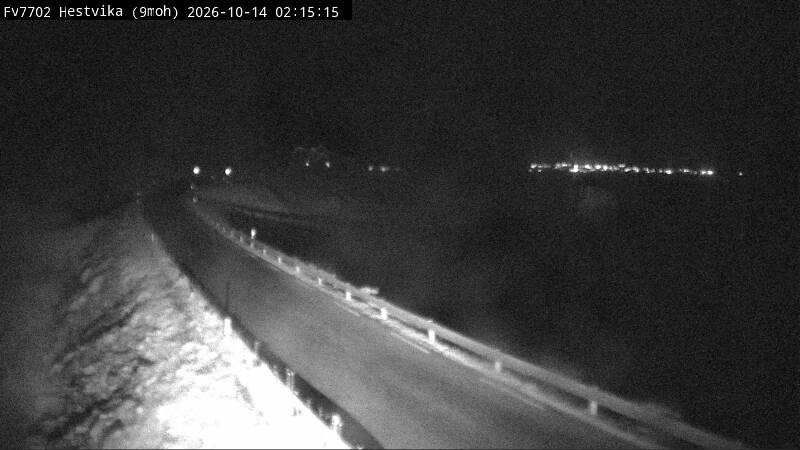
Fv7702 Hestvika
Hestvika, Andøya, Vesterålen
Coastal road on Andøya with the sea and Bleik's lights under a wide sky; infrared B/W at night.
Live hourly aurora score for Andenes, Norway: NOAA activity, cloud cover, darkness and the moon, with the nearest webcams.
Hestvika, Andøya, Vesterålen
Coastal road on Andøya with the sea and Bleik's lights under a wide sky; infrared B/W at night.
Risøyhamn, Andøya, Norway
Air-ambulance weather cameras at Risøyhamn on Andøya, Vesterålen.
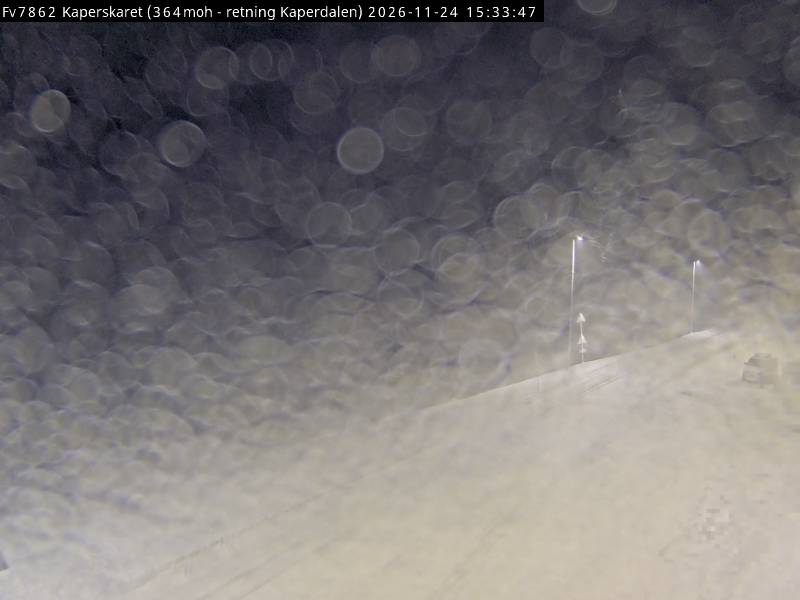
Kaperskaret pass, Senja, Norway
Mountain pass at 364 m; the top half of the frame is open sky, in colour at night.
Myre, Vesterålen, Norway
Air-ambulance weather cameras at Myre in Øksnes, Vesterålen.
Stornes, Harstad, Norway
View from north of Harstad towards Grytøya island, between Lofoten and Tromsø.
Finnsnes, Senja, Norway
Air-ambulance weather camera at Finnsnes, the mainland gateway to Senja.
Stokmarknes, Vesterålen, Norway
Air-ambulance weather camera at Stokmarknes, between Lofoten and Vesterålen.
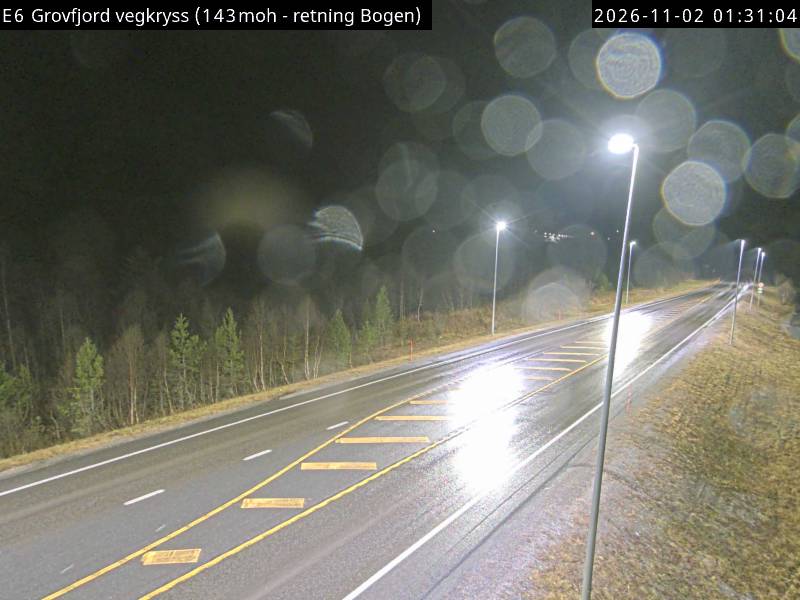
Grovfjord, Troms, Norway
Colour junction camera with a wide view of sky and clouds above the forest.
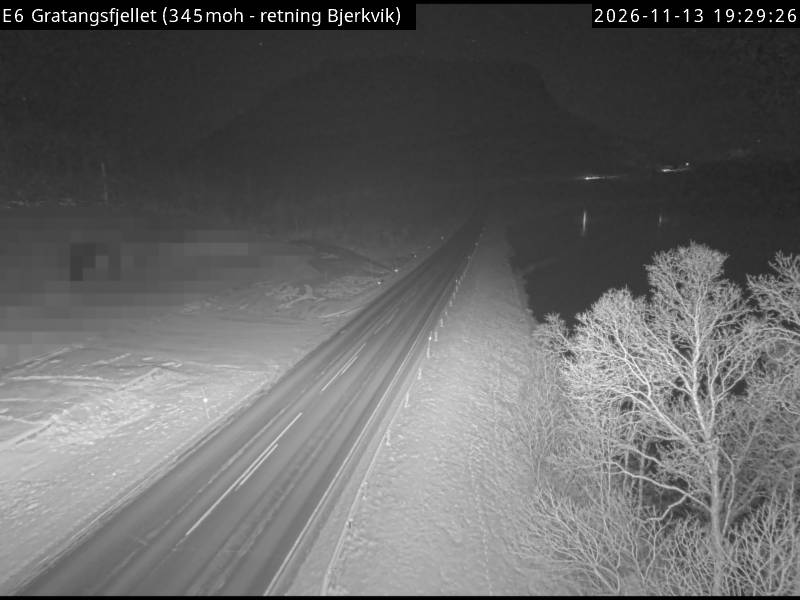
Gratangsfjellet, Troms, Norway
Mountain pass with a large fell and open sky above the road; infrared B/W at night.
Andenes lies at 69.31° N in Nordland, Norway, about 306 km north of the Arctic Circle. With a geomagnetic latitude of about 67.5°, it sits under the auroral oval: even quiet nights (Kp 1–2) can bring aurora overhead. Over the long term, a dark, clear night here has roughly a 75% chance of some visible aurora.
Darkness is never the problem in winter: the sun stays below the horizon from late November to mid-January, and nights with at least two hours of real darkness run from early September to mid-April. Between mid-May and late July the midnight sun makes aurora impossible to see. Around the winter solstice the sun is more than 12° below the horizon for about 16 hours a day.
Clouds decide most nights. Long-term records for Senja, 46 km away, show night-time cloud cover averaging 74% in September, the clearest month of the season, so roughly 26% of nights are clear then. Check the cloud layers in the hourly forecast above: a short drive can make the difference when cloud is patchy.
Coordinates: Wikipedia. Magnetic latitude, Kp and darkness are calculated from them; the clear-night chance is a long-term average, not a forecast.
