Hattfjelldal weather camera (Yr)
Hattfjelldal, Nordland, Norway
Air-ambulance weather camera at inland Hattfjelldal, near the Swedish border.
Live hourly aurora score for Hemavan, Sweden: NOAA activity, cloud cover, darkness and the moon, with the nearest webcams.
Hattfjelldal, Nordland, Norway
Air-ambulance weather camera at inland Hattfjelldal, near the Swedish border.
Trofors, Nordland, Norway
North-facing air-ambulance weather camera at Trofors in the Vefsna valley.
Mosjøen, Nordland, Norway
Air-ambulance weather camera at Mosjøen in Helgeland, looking north-west.
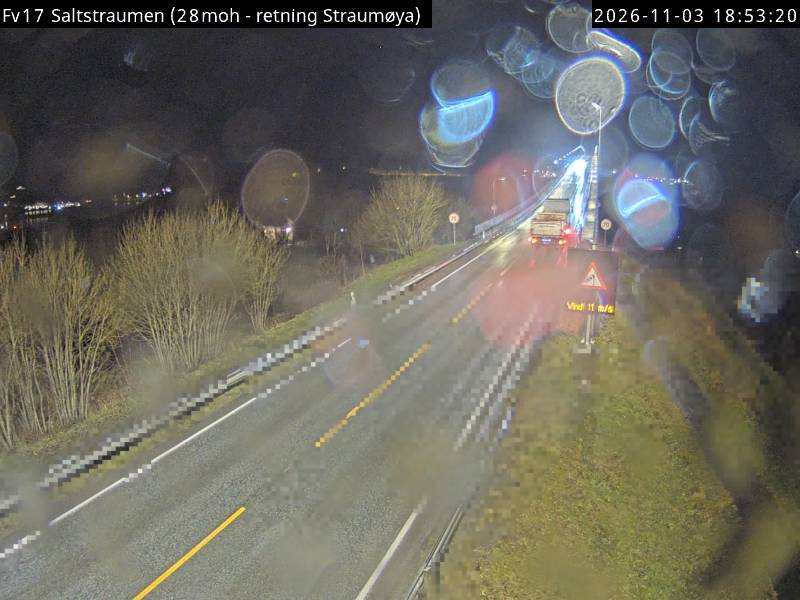
Saltstraumen, Bodø, Nordland
Colour camera at the Saltstraumen bridge approach; fjord, village lights and a strip of sky.
Bodø, Nordland, Norway
Three air-ambulance weather cameras in Bodø (north, north-east and west views).
Arvidsjaur, Swedish Lapland
Continuous stream from Arvidsjaur, just south of the Arctic Circle.
Norsjö, Västerbotten, Sweden
Private observatory and weather station in Västerbotten with live sky cameras and local aurora data.
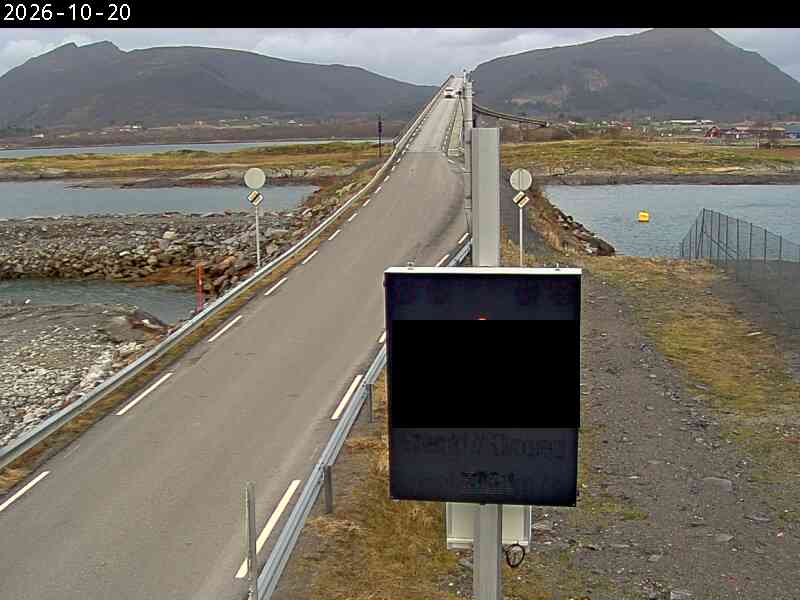
Engeløya, Steigen, Nordland
Colour bridge camera over the fjord; on clear nights stars show above the far-shore lights.
Porjus, Jokkmokk, Sweden
North and west views from Porjus on the Lule River, north of the Arctic Circle.
Hemavan lies at 65.83° N in Västerbotten, Sweden, about 81 km south of the Arctic Circle. With a geomagnetic latitude of about 64.3°, it sits under the auroral oval: even quiet nights (Kp 1–2) can bring aurora overhead. Over the long term, a dark, clear night here has roughly a 58% chance of some visible aurora.
Nights with at least two hours of real darkness run from late August to mid-April. Around midsummer the sun does not set at all (mid-June to late June), and the light nights either side rule out aurora. Around the winter solstice the sun is more than 12° below the horizon for about 15 hours a day.
Clouds decide most nights. The hourly score above uses the live cloud forecast for this exact spot; for trip planning, the Kiruna guide (318 km away) covers the best months and clear-night odds for the wider region.
Coordinates: Wikipedia. Magnetic latitude, Kp and darkness are calculated from them; the clear-night chance is a long-term average, not a forecast.
