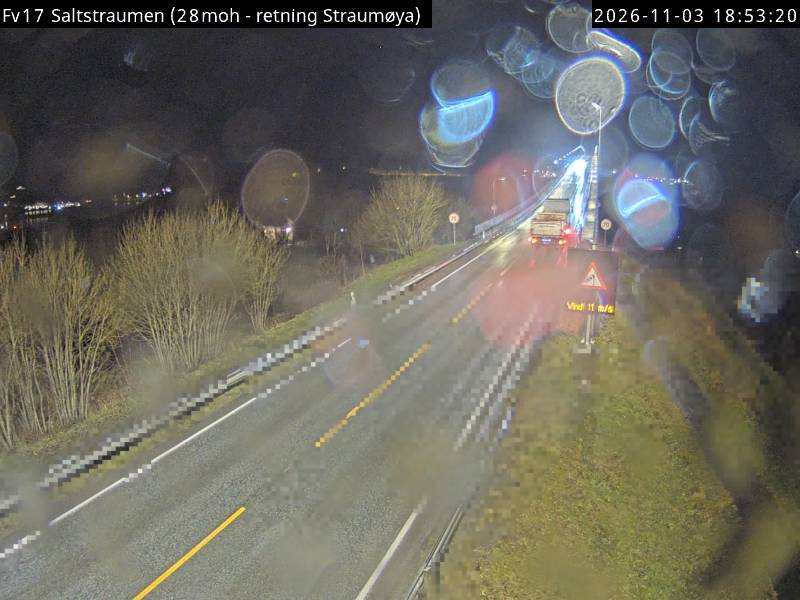
Fv17 Saltstraumen
Saltstraumen, Bodø, Nordland
Colour camera at the Saltstraumen bridge approach; fjord, village lights and a strip of sky.
Live hourly aurora score for Fauske, Norway: NOAA activity, cloud cover, darkness and the moon, with the nearest webcams.
Saltstraumen, Bodø, Nordland
Colour camera at the Saltstraumen bridge approach; fjord, village lights and a strip of sky.
Bodø, Nordland, Norway
Three air-ambulance weather cameras in Bodø (north, north-east and west views).
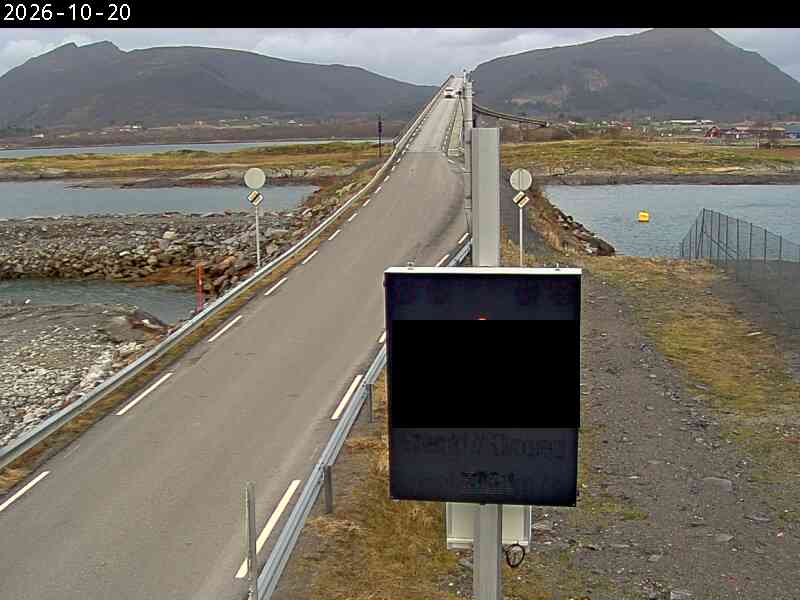
Engeløya, Steigen, Nordland
Colour bridge camera over the fjord; on clear nights stars show above the far-shore lights.
Svolvær, Lofoten, Norway
Two live cameras at the Svinøya fishermen's cabins in Svolvær, Lofoten.
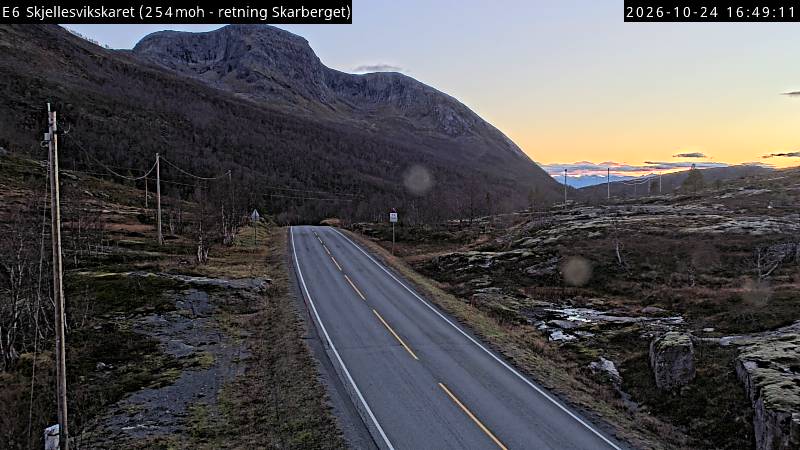
Skjellesvikskaret, Nordland, Norway
Mountain pass between steep slopes with a good patch of sky; infrared B/W at night.
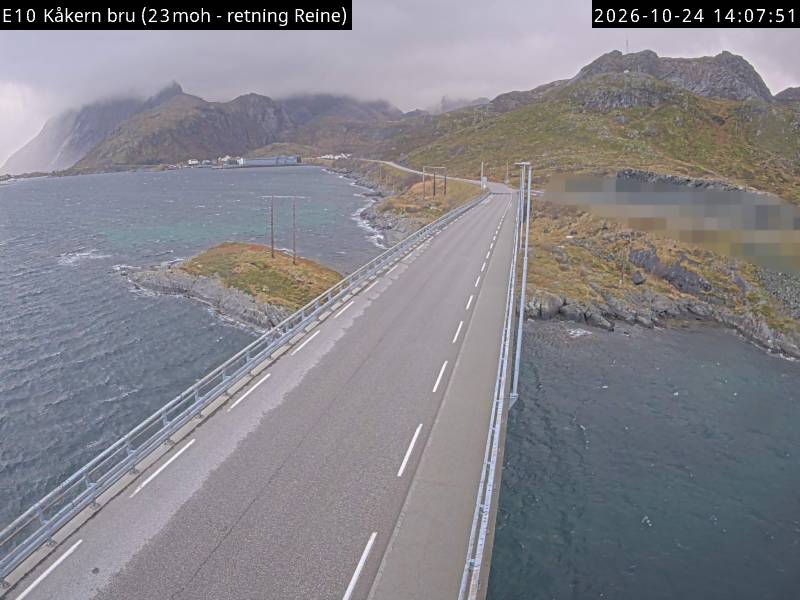
Kåkern bridge near Reine, Lofoten
View from the bridge towards the Reine peaks; the sky band is narrow but dark.
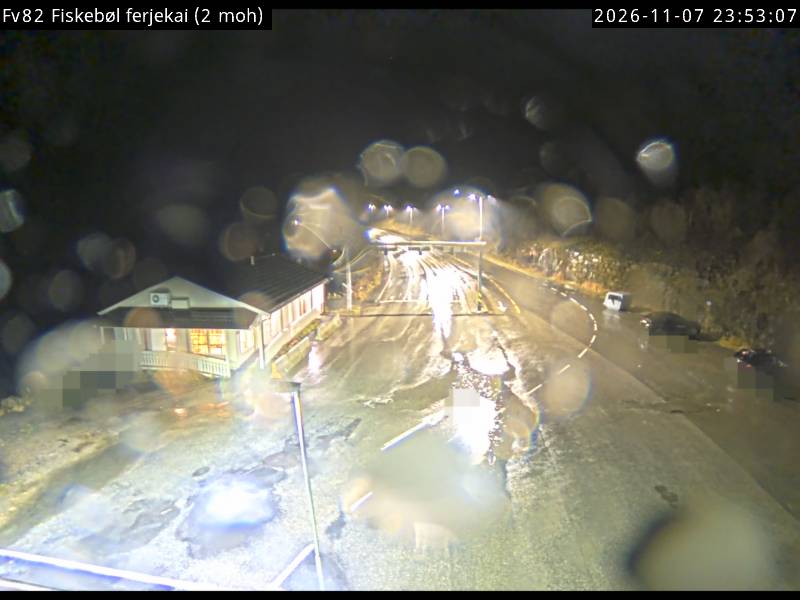
Fiskebøl ferry quay, Lofoten, Norway
Colour quay camera with a wide sky above the mountains; stars show on clear nights.
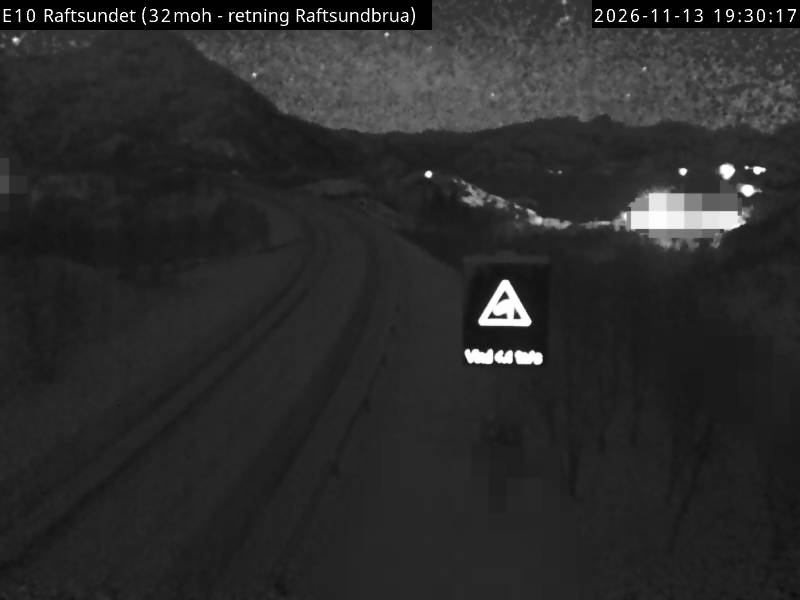
Raftsundet, Lofoten–Vesterålen
Mountains along Raftsundet with sky above the ridge line; infrared B/W at night.
Stokmarknes, Vesterålen, Norway
Air-ambulance weather camera at Stokmarknes, between Lofoten and Vesterålen.
Fauske lies at 67.26° N in Nordland, Norway, about 78 km north of the Arctic Circle. With a geomagnetic latitude of about 65.6°, it sits under the auroral oval: even quiet nights (Kp 1–2) can bring aurora overhead. Over the long term, a dark, clear night here has roughly a 71% chance of some visible aurora.
Nights with at least two hours of real darkness run from late August to mid-April. Around midsummer the sun does not set at all (early June to mid-July), and the light nights either side rule out aurora. Around the winter solstice the sun is more than 12° below the horizon for about 15.5 hours a day.
Clouds decide most nights. Long-term records for Lofoten Islands, 114 km away, show night-time cloud cover averaging 72% in September, the clearest month of the season, so roughly 28% of nights are clear then. Check the cloud layers in the hourly forecast above: a short drive can make the difference when cloud is patchy.
Coordinates: Wikipedia. Magnetic latitude, Kp and darkness are calculated from them; the clear-night chance is a long-term average, not a forecast.