When to go
FMI gives Finland's best months as February–March and September–October, best hours 21:00–01:00; with weather included, March and early April stand out in the north.
Winter is long in Kilpisjärvi: snow usually lasts from October to May. In March, long days allow skiing and snowshoeing while nights stay dark for aurora.
Where to watch
The village is tiny, so light pollution is minimal; a few hundred metres on foot is enough.
- Lake Kilpisjärvi shore: A wide horizon over the frozen lake with Saana as a foreground.
- Foot of Saana: The lower parts of trails from the Kilpisjärvi Nature Centre; don't climb to the top in the dark.
- Three-Country Cairn (Treriksröset): Where Finland, Sweden and Norway meet; a daytime trip by ski or snowmobile in winter.
The University of Helsinki's research station and the KAIRA radio facility are also here.
Weather and clouds
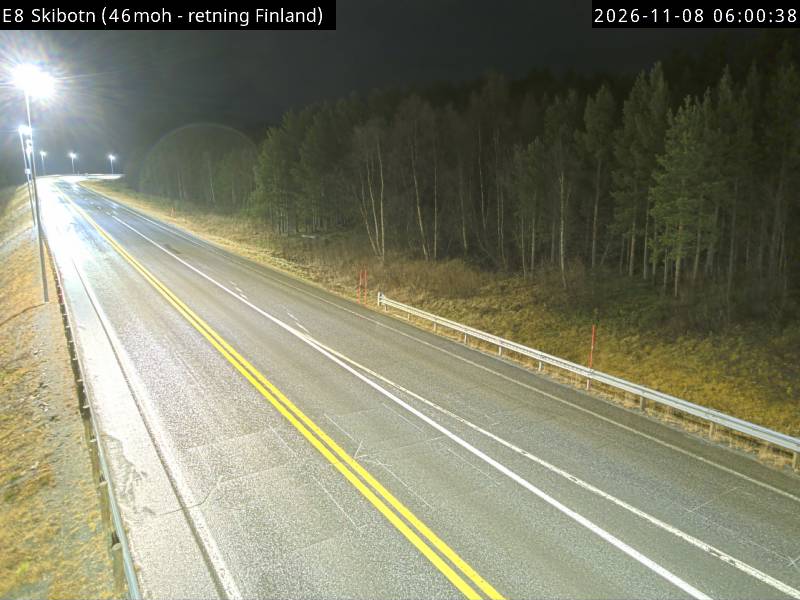
Kilpisjärvi lies in the mountains between the Norwegian coast and inland Finland. Tromsø tour operators drive here via Skibotn when the coast is cloudy, so the area often serves as an escape route.
Mountain weather still changes fast. We found no separate cloud statistic for Kilpisjärvi; staying several nights is the safe bet.
Getting there and where to stay
The village has a few hotels, cabins and a camping resort, which can fill early in winter. Shops and restaurants are limited, and fuel stations are sparse.
Driving from Tromsø is usually the most sensible option for both flights and time. In winter the E8 road can close in storms; check road conditions before you leave.
Safety and cold
Kilpisjärvi's record low is -47.2 °C, and nights below -30 °C occur in winter. Take frostbite seriously for face, hands and feet.
The area is remote with few services: carry spare fuel, a charger and a hot drink. On the frozen lake, use only marked snowmobile tracks.